GreenUniverse
GreenUniverse Helps students develop sustainable habits by turning everyday campus interactions into opportunities for environmental awareness and action.
Feb 2025 - Jul 2025
TEAM
Cynthia Ni + 2 Team Members
PROJECT TYPE
Uni Project- UX design Studio
TOOLS
Figma, Adobe Illustrator
MY ROLE & IMPACT
Conducted interviews, surveys, and online ethnography to uncover key pain points. Synthesized findings into personas, journey maps, and a clearly defined problem space. Led concept ideation, mid-fidelity prototyping, and design refinement. Ran usability testing (think-alouds, SUS surveys, and post-interviews) and analyzed the results. Built the visual identity and design system for the entire high-fidelity prototype.
Impact Summary
⚡️ Motivates sustainable actions
I designed GreenUniverse to make sustainable campus initiatives feel rewarding and worth participating in.
🌱 Raises environmental awareness
Through interactive and playful experiences on campus, I helped students learn and engage with sustainability in a fun, memorable way.
🏡 Fosters a greener community
Built a shared culture of sustainability through collective participation in the gamified “Green House” contribution system.
Context
Following the course’s design brief “Creative Care,” our team chose to focus on care for sustainability on campus.
We Asked Ourselves:
How can we nurture students’ sustainable practices in their everyday campus life?
What care services can be improved to better support students’ sustainable behaviors?
Target Groups
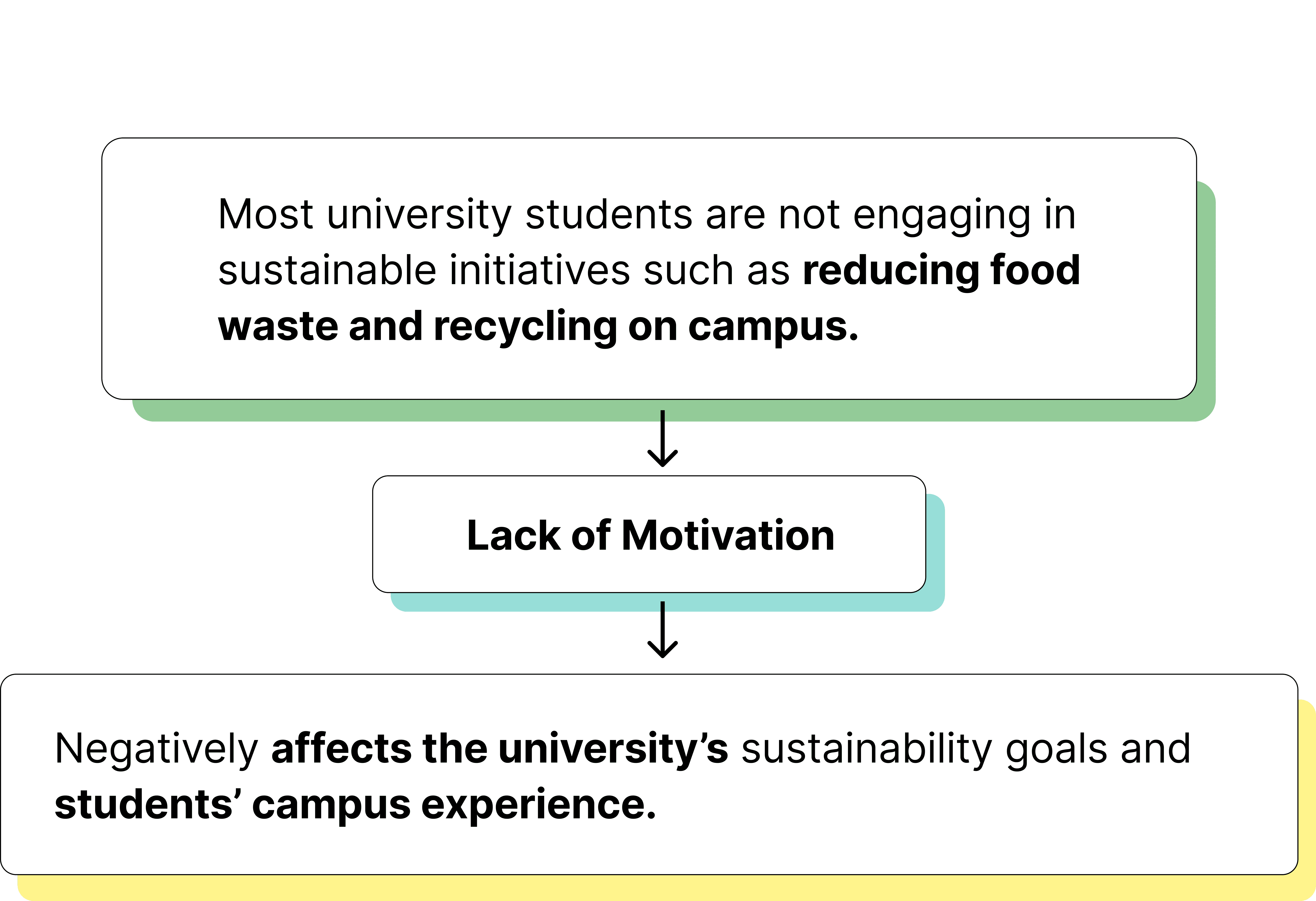
GreenUniverse is targeting university students that care about sustainability but are not motivated and struggle to start or get engaged with sustainable initiatives

The Problem
🥱 Low student engagement in sustainable actions
“Even though the students indicate a great deal of awareness and concern...they lack interest and willingness to participate in initiatives towards achieving sustainability” (Abubakar, 2016).
Research Problem Statement
Research Objectives
🔎 To explore what initiatives have already been taken to improve sustainability on campus and how effective or not were they.
📚 How much knowledge and education do student have on food waste and energy consumption?
🤔 Investigate the reason behind student’s lack of motivation to participate in sustainability initiatives.
🚮 What approaches do students take to manage their food waste on campus.?
🔋 How does the university’s students manage to save energy on campus?
Research Process
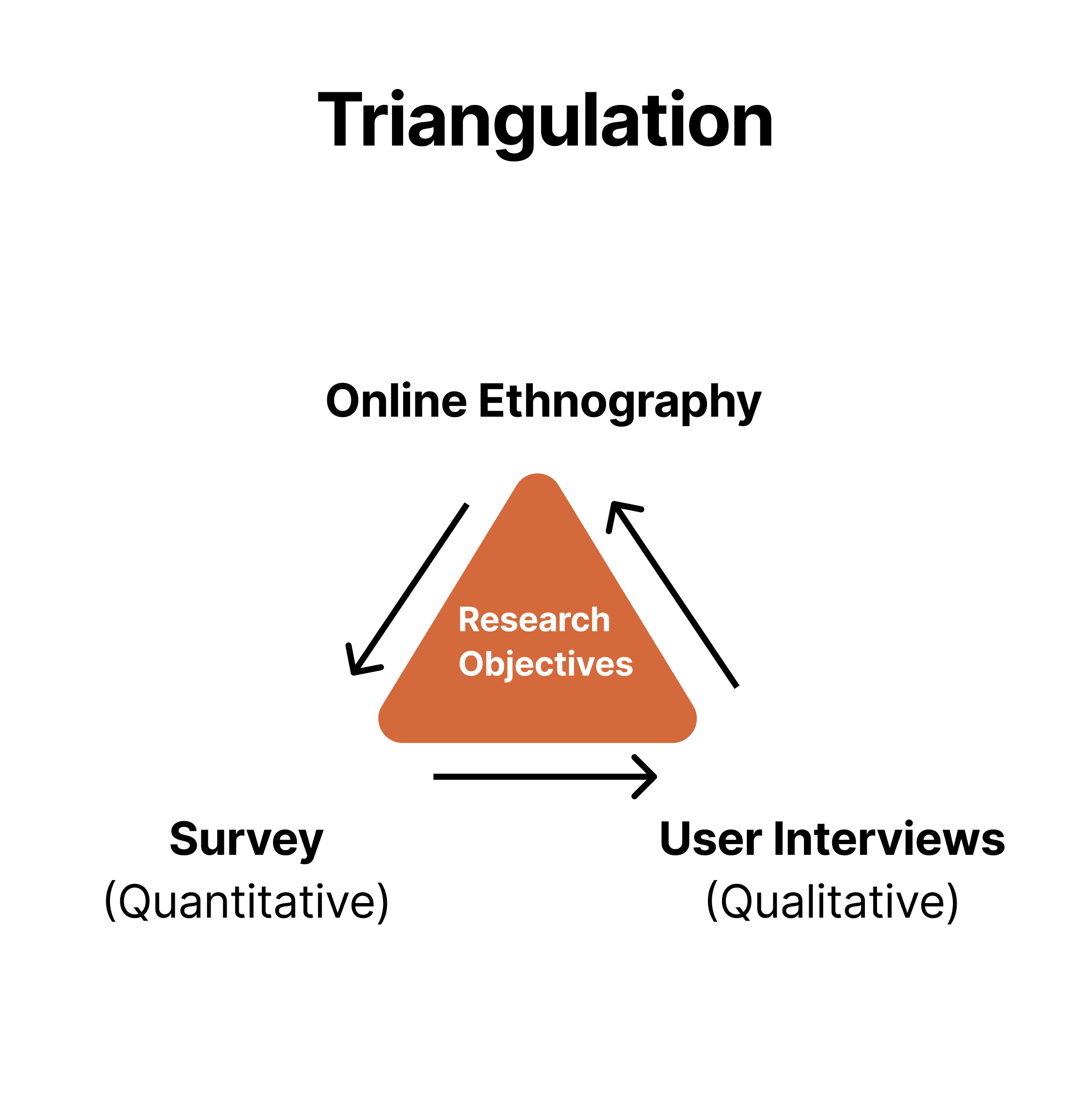
By triangulating and comparing the three different data types, we can fill in the differences and gaps in research information from multiple perspectives, improve the accuracy and effectiveness of research results, identify correlations within the data, and generate new research questions and directions.
Data Analysis
Key Insights
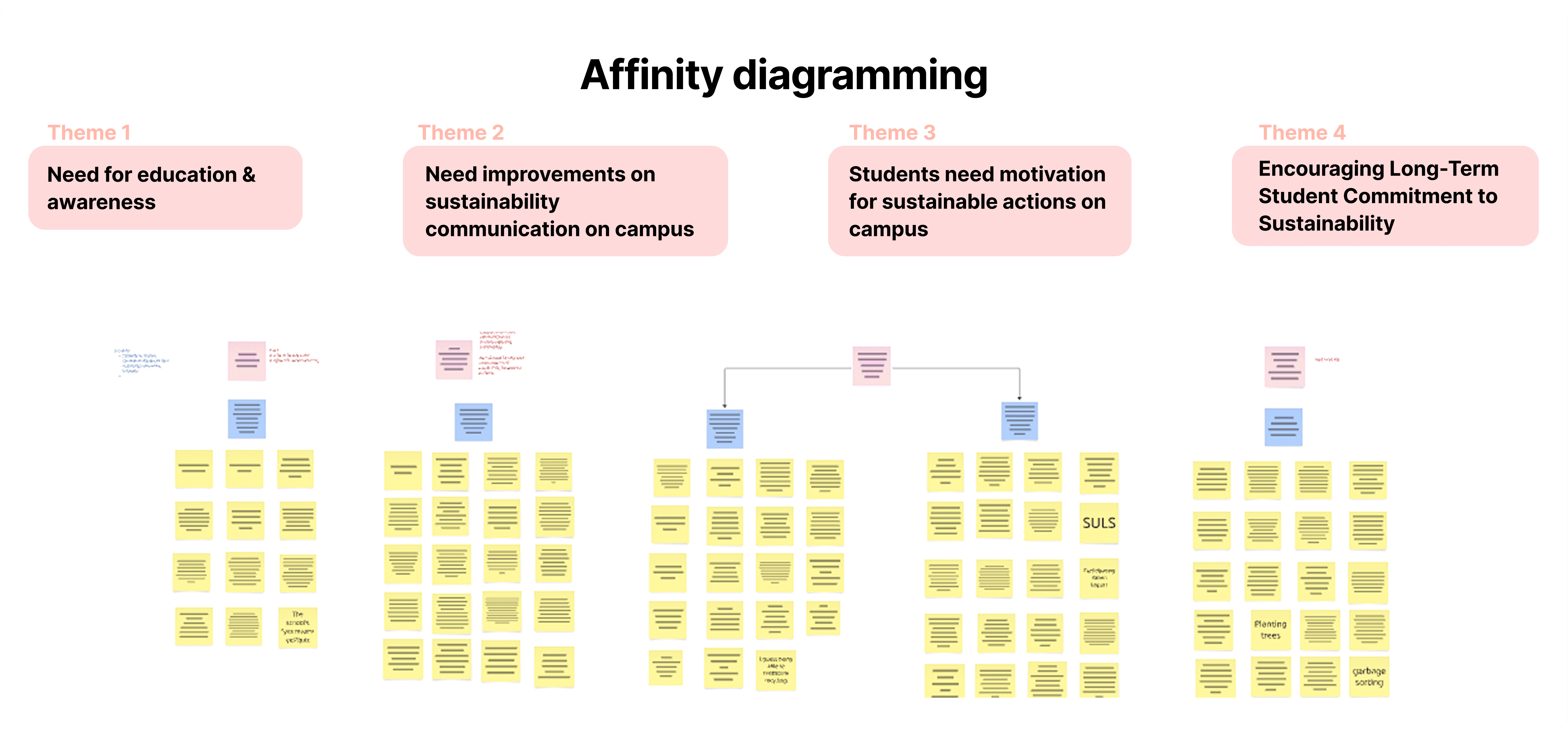
🏅 Students’ Low Motivation & Commitment
Students are not resisting sustainable action itself, but they feel no personal reason to engage, as these activities often don’t align with their personal values or interests.
📣 Student interest vs. campus communication
Students want to participate, but find sustainability initiatives and communication on campus too formal, distant, or irrelevant to their daily lives.
📘 The lack of sustainability education
Students are unaware of the risks and consequences of unsustainable lifestyles.
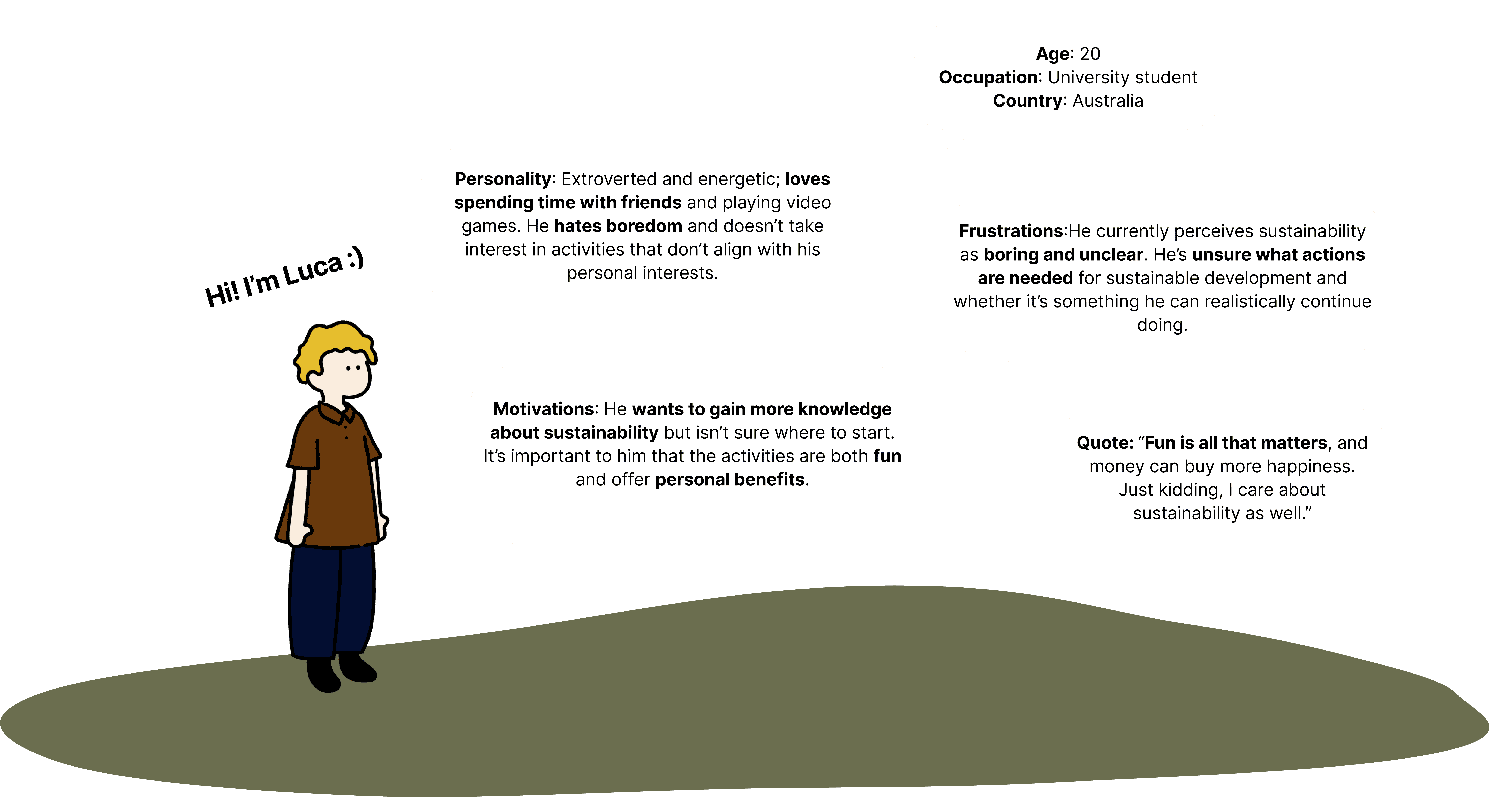
User Persona
Journey Mapping
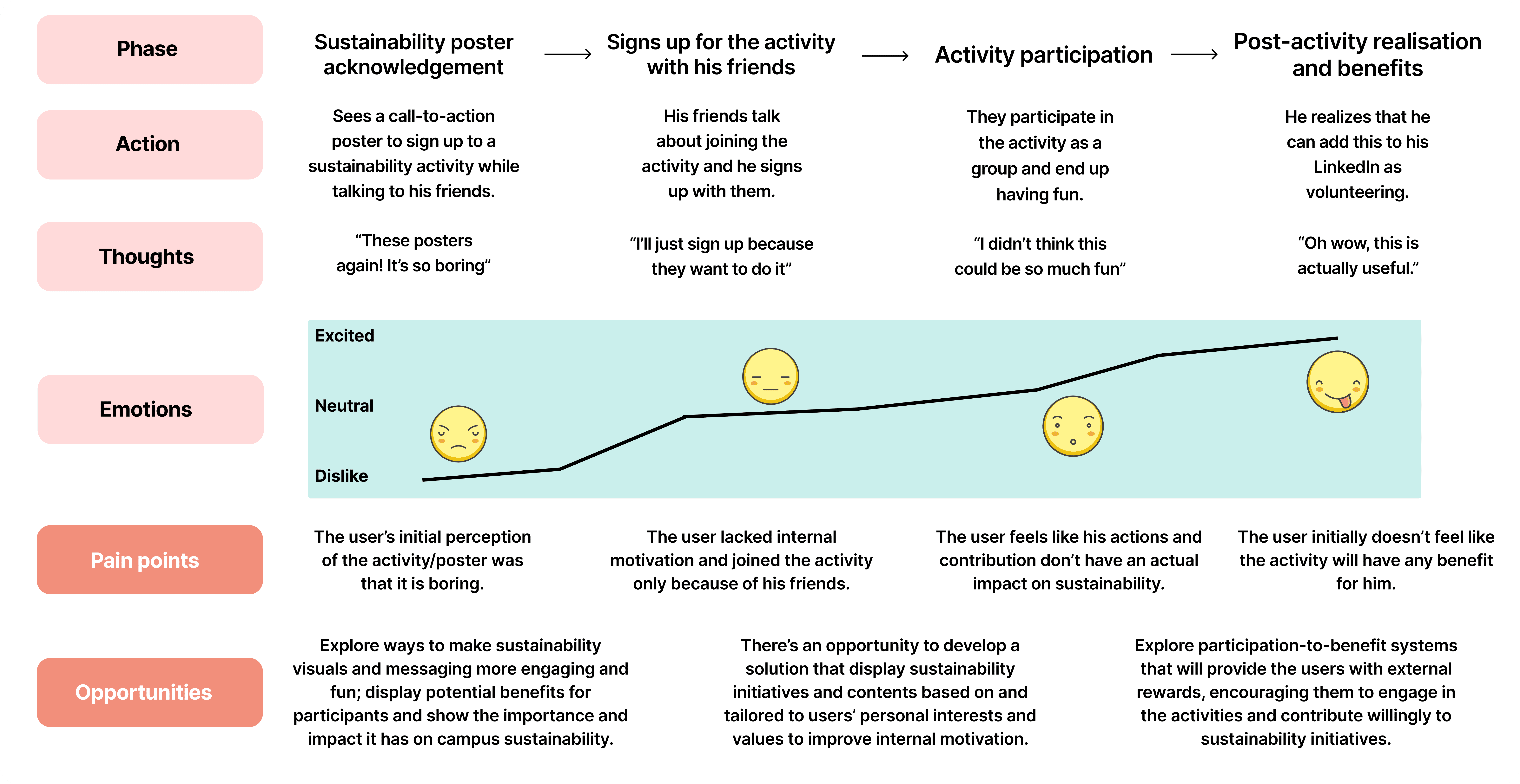
Luca's journey through an activity shows emotional highs, lows and opportunities to address the pain points.
💡 How might we…
Create visible and engaging sustainability experiences that foster intrinsic motivation around personal values and purpose, while also raising extrinsic motivation through recognition and tangible benefits to build long-term student commitment and strengthen community impact on campus?
Ideation - Storyboarding
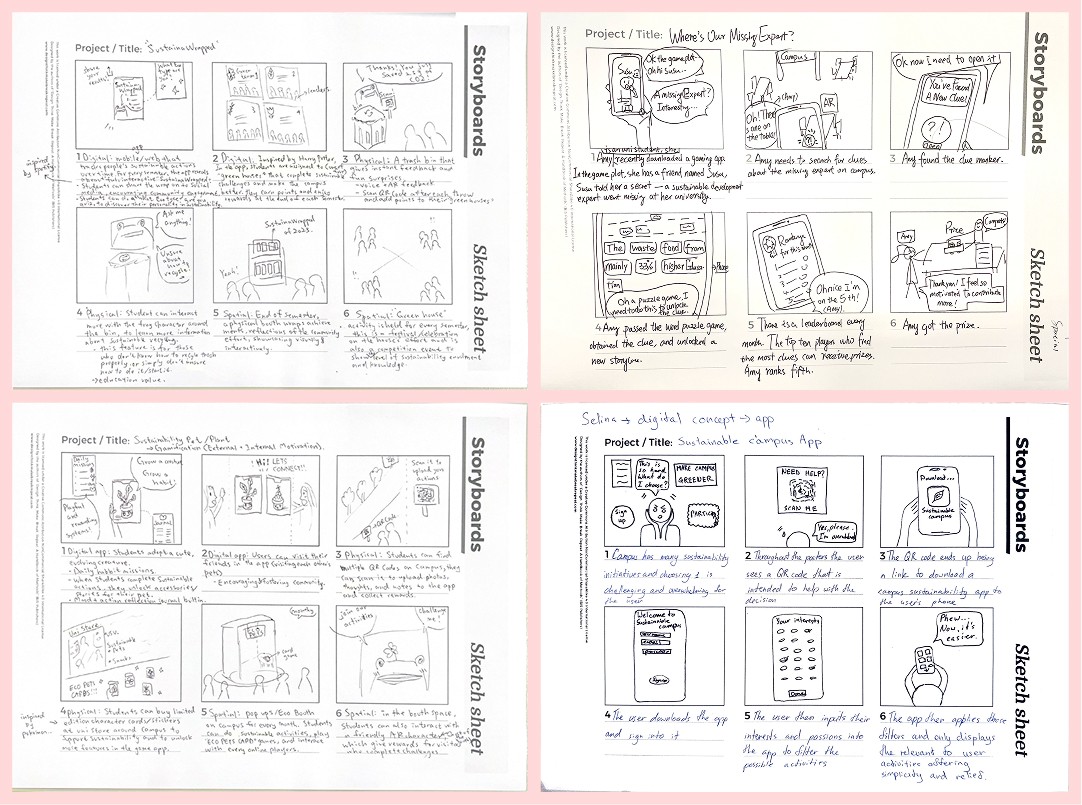
Our ideation process began with creating individual storyboards depicting the potential user experience and our personal visions for the project.
Using storyboarding helped us visualize our ideas and understand how well they fit within our problem area.
Evaluation - Decision matrix
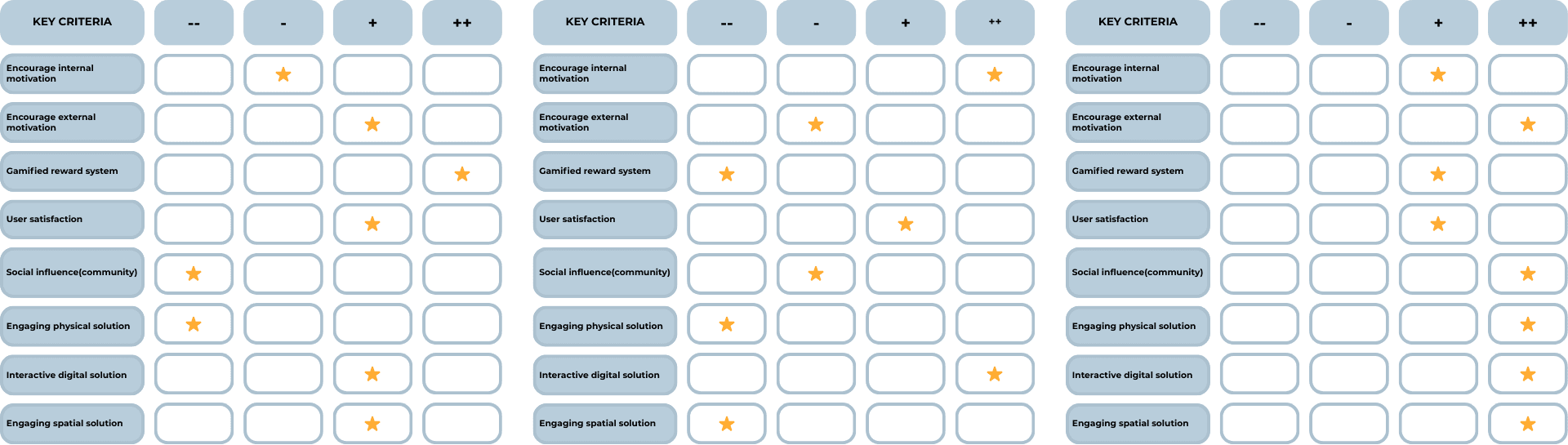
Post-evaluation:
We decided to develop something new, merging different parts of our ideas into one cohesive design experience which would fit all of our requirements, while representing each of our creative visions allowing us to collectively participate in the iteration process.
Usability Testing Fair
Results

What went well and what didn't?
Based on the data and feedback collected, users responded positively to the theme and overall concept of our experience. However, we identified some visibility issues with the digital prototype and inconsistencies between the physical booth and the moving smart bin.
Design Refinement
Improve the overall usability of the app.
Strengthen the contextual connection between the booth and the bin.
Further explore the potential of the Smart Bin.
Final Outcome
Reflection & Next Steps
🧠 Rethinking UX
Through GreenUniverse, I reflected on how user experience involves more than just UI. I began to pay closer attention to how the human body interacts with environments; how movement, posture, and the senses all contribute to how an experience is perceived. This project required thinking not just about what users see or click, but how they physically engage with a space, what draws them in, and how their bodies respond.
🫂 Lets Not Cause Harm
I also began reflecting on the ethical impact of design decisions. It's crucial to consider consent, user vulnerability, and mental well-being, as our choices have real effects on people’s lives.